
Author

admin

Browsing

Prediction markets are supposed to turn public information into prices.

In the case now unfolding around Polymarket, prosecutors say the opposite happened as a US Army soldier allegedly used classified knowledge about a secret military operation to bet on the outcome.

According to Thursday’s unsealed indictment and the CFTC’s civil complaint, Gannon Ken Van Dyke staked about $33,034 and allegedly walked away with roughly $409,881 after wagering on Venezuela-linked event contracts tied to Nicolás Maduro’s capture.

When a classified operation becomes a trading signal

The government says Van Dyke was not an outside spectator.

Prosecutors allege he was involved in the planning and execution of “Operation Absolute Resolve,” the US military mission to capture Maduro and his wife, Cilia Flores.

The indictment says he had access to sensitive, nonpublic, classified information from at least Dec. 8, 2025, through at least Jan. 6, 2026, and that he signed nondisclosure agreements covering Western Hemisphere operations.

Officials say he was stationed at Fort Bragg and had been an active-duty Army soldier for years.

That access, prosecutors allege, became the basis for trading on Polymarket.

The DOJ says Van Dyke created an account around Dec. 26, 2025 and made about 13 bets from Dec. 27 through Jan. 2.

His bets were on the “Yes” side of markets, including “Maduro out by January 31, 2026,” “US forces in Venezuela by January 31, 2026,” “Will the US invade Venezuela by January 31, 2026,” and “Trump invokes War Powers against Venezuela.”

The total outlay was about $33,034, according to the indictment.

The bet paid off as soon as the raid became public

The timing is the heart of the case.

Prosecutors say that in the predawn hours of Jan. 3, 2026, US special forces apprehended Maduro and Flores in Caracas, and hours later the president publicly announced the operation.

After that announcement, Polymarket resolved several of the relevant contracts to “Yes,” including “Maduro out by January 31, 2026” and “US forces in Venezuela by January 31, 2026.”

The DOJ says Van Dyke’s profits totaled about $409,881.

The complaint adds a detail that makes the trade look less like luck and more like advanced positioning.

It says Van Dyke used the Polymarket handle “Burdensome-Mix” and bought more than 436,000 “Yes” shares in the Maduro-out contract between Dec. 30 and Jan. 2.

The CFTC says those trades generated more than $404,000 in profit.

Read more- Inside $170M Iran ceasefire bets: Polymarket faces scrutiny surge

Regulators are treating this as a market-structure case

The enforcement response is broader than one trader.

The DOJ charged Van Dyke with unlawful use of confidential government information for personal gain, theft of nonpublic government information, commodities fraud, wire fraud, and making an unlawful monetary transaction.

The CFTC filed a parallel civil complaint seeking restitution, disgorgement, civil monetary penalties, trading and registration bans, and a permanent injunction.

The CFTC said this is its first insider-trading case involving event contracts and its first use of the so-called “Eddie Murphy Rule” for misuse of government information.

A concealment narrative strengthens the fraud case

Prosecutors also say the story did not end once the contracts were settled.

The indictment alleges Van Dyke withdrew most of the proceeds, moved about 437,859 USDC.e to a foreign cryptocurrency vault.

He then shifted roughly 444,209 USDC.e into a newly created brokerage account.

It further says he later asked Polymarket to delete his account and changed the email on his crypto exchange account to obscure his identity.

The post How a US soldier won $410K on Polymarket betting on Maduro raid appeared first on Invezz

Americans are getting smaller pay raises while tariffs and higher gas prices are threatening to make everything more expensive.

Translation: The affordability problem isn’t improving.

New government data released Friday showed non-supervisory workers getting a 3.4% pay raise on average hourly earnings over the last year. That’s the slowest pace of wage gains since 2021, and a downshift from the last two years, when pay bumps were closer to 4%.

The slowdown comes as economists worry about rising inflation, with the Iran war choking off oil tankers and pushing gas prices up over $1 per gallon in just a month, to a national average of $4.09 on Friday.

As diesel costs break $5.50 a gallon (compared to just $3.89 a month ago), retailers and grocers are now contending with higher transportation costs. Amazon said Thursday it will begin charging sellers a 3.5% “fuel and logistics-related surcharge” beginning on April 17.

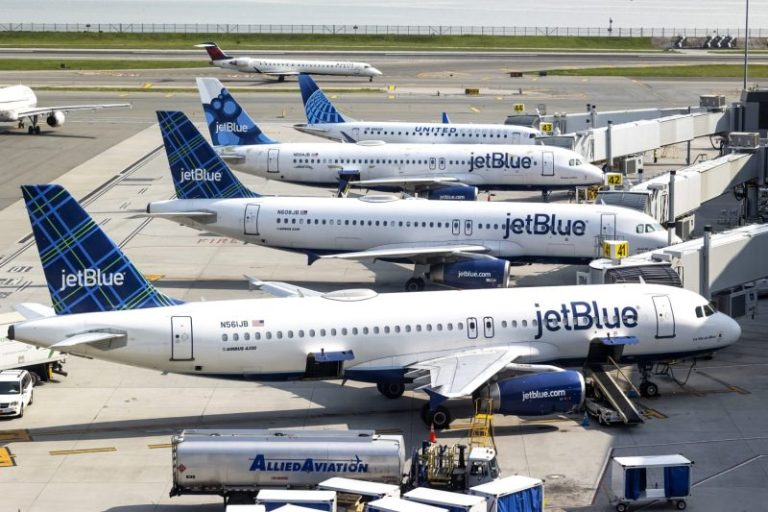
Airlines like United and JetBlue are raising bag fees in an effort to offset sky-high jet fuel costs. The International Air Transport Association says the price of jet fuel is up 104% in the past month.

“With the recent uptick in inflation driven by energy prices, real wage growth is likely to decelerate further, putting increased pressure on consumers,” said Thrivent’s chief financial and investment officer, David Royal.

For now, Americans are still seeing their earnings rise at a faster pace than the increase in price tags at the store. As pay rose by 3.4%, the most recent inflation data showed prices rising by 2.4% year-over-year.

Wage gains for non-supervisory employees — a category that includes roughly four out of every five non-farm workers — have been outpacing price increases since March 2023, when post-pandemic inflation finally began to cool.

But the concern is that the story could change soon. Because of the bump from oil prices, Navy Federal Credit Union Chief Economist Heather Long said it’s possible inflation could pace at 4% this month.

“Four percent is above that 3.5 percent annual wage gain, and that’s where you see a lot of squeeze on workers, particularly middle-class and moderate-income workers,” Long said.

Warning signs are flashing that slowing wage growth could ripple beyond the gas station and prices at the grocery store. Higher mortgage rates now have some worried about icing out even more potential homebuyers.

The average 30-year fixed mortgage rate rose from 5.99% at the start of the war to 6.45% on April 3, according to Mortgage News Daily. The rise is due in part to concerns that the Federal Reserve will have to raise interest rates to tamp down on war-driven inflation.

“With choppy job growth, weaker labor-force attachment and rising uncertainty, many households — especially renters and first-time buyers — could become more cautious as weaker inflation-adjusted wages erode recent affordability improvements,” said Zillow senior economist Orphe Divounguy.

If wages can’t keep up with rising costs across the board, it’s likely that affordability will become a larger issue than it already was prior to the war. An NBC News poll conducted during the first week of the war with Iran found that, for a plurality of respondents, inflation and the cost of living was the most important issue facing the country.

Economists feel the same way.

Responding to a question from NBC News at a March 18 news conference, Federal Reserve Chair Jerome Powell noted that “real” wage gains — a measure of wages adjusted for inflation — need to be positive in order for Americans to feel better about affordability.

“it will take some years of positive real earning gains for people to feel good again, we think. But you’re right — when you talk to people, they do feel squeezed,” Powell said.

A Democratic congresswoman whose parents fled the regime of Ayatollah Ruhollah Khomeini decades ago announced Monday she would file articles of impeachment against Secretary of War Pete Hegseth for alleged war crimes amid the current conflict.

Rep. Yassamin Ansari of Arizona previously told the New York Times she initially “felt a rush of hope, but also unease” when she learned Americans and Israelis had taken out Ayatollah Ali Khamenei in February.

But she has since been harshly critical of how the Trump administration has overseen the conflict, including President Donald Trump’s Easter message to what’s left of Iranian leadership to “open the f—ing Strait” of Hormuz by Tuesday or risk strikes on critical infrastructure.

“Donald Trump’s deranged statements — including one on Easter Sunday — are further entrenching our country and our world in another devastating, never-ending war,” Ansari said in a statement announcing her plans to impeach Hegseth.

77-YEAR-OLD HOUSE DEM FACING YOUNGER PRIMARY CHALLENGERS SEEKS TO IMPEACH DONALD TRUMP

Ansari claimed Trump is threatening war crimes in violation of the Geneva Convention and has already committed “illegal actions and atrocities already committed at his direction — including violence that has destroyed schools, hospitals, and critical civilian infrastructure.”

“As the daughter of Iranian immigrants who fled this regime, and as an American Congresswoman who swore an oath to the United States Constitution, I know that this cannot go on,” she said.

Ansari’s father was a medical student studying in the United States when the Iranian Revolution broke out and couldn’t return to Iran, while her mother fled and was sent to live with another family in Delaware at age 17 after the Khomeini regime continually restricted women’s rights, according to the UK Guardian.

Ansari urged invocation of the 25th Amendment to remove Trump from office and said she would file articles of impeachment and seek to formally impeach Hegseth “next week.”

DEMOCRATS THREATEN TO GRIND SENATE TO A HALT TO FORCE PUBLIC IRAN HEARINGS

She alleged the Pentagon chief “repeatedly violat[ed] his oath of office and his duty to the Constitution. Only Congress has the power to declare war, not a rogue president or his lackeys.”

“Hegseth’s reckless endangerment of U.S. servicemembers and repeated war crimes, including bombing a girls’ school in Minab, Iran, and willfully targeting civilian infrastructure, are grounds for impeachment and removal from office.”

Hegseth and Trump recently engineered the rescue of an airman shot down by Iranian forces over the weekend, with the president telling the press at the White House that a large military operation was required.

Gen. Dan “Raizin” Caine declined to state how many troops were involved, likely for security reasons.

When reached for comment, Pentagon Press Secretary Kingsley Wilson slammed the plan to impeach her boss, telling Fox News Digital that Ansari is “just another Democrat trying to make headlines” as an ongoing Mideast military operation and two “daring and successful” rescue operations were conducted.

“Secretary Hegseth will continue to protect the homeland and unleash epic fury on Iran’s radical regime,” Wilson said.

“This is just another charade in an attempt to distract the American people from the major successes we have had here at the Department of War.”

Fox News Digital reached out to the White House for comment.

“What is said in the room stays in the room.” That’s the unwritten rule of diplomatic talks.

But the US President has a different approach. He posts about it. A lot.

In the past two weeks, as American and Iranian delegations worked through Pakistani mediators to put a formal peace framework in place, Trump published over 900 words about the war on Truth Social in a single morning.

He contradicted his own senior officials on live television. He told reporters details of a nuclear agreement that Iran immediately denied ever agreeing to.

And on Thursday, he ordered the US Navy to “shoot and kill any boat” laying mines in the Strait of Hormuz.

The talks are now in limbo.

The post that broke the room

The clearest picture of how the posts are affecting diplomacy came not from Iran but from inside Trump’s own administration.

Multiple senior officials spoke anonymously to the Wall Street Journal and CNN this week, describing what one source characterised as the president’s “leadership and decision-making pathologies.”

That kind of language, from officials inside the White House, is extraordinary.

The specific incident that triggered the alarm was when Trump told reporters that Vice President JD Vance would not be travelling to Islamabad to lead the next round of talks, citing unspecified security concerns.

At the same moment, UN Ambassador Mike Waltz and Energy Secretary Chris Wright were on separate television programs saying the opposite.

Eventually, Vance did make the trip. Trump was wrong, and his officials had to publicly clean it up in real time.

That same week, Trump claimed publicly that Iran had agreed to an “unlimited” suspension of its nuclear program.

Iran’s foreign ministry spokesperson Esmaeil Baghaei denied it within hours in a statement to Iranian state broadcaster IRIB.

Whatever the actual state of the negotiations at that moment, the public denial handed hardliners in Tehran a domestic gift they did not have to work for.

“No pressure” with a blockade running

On April 20, Trump published a series of posts on Truth Social.

He covered comparisons to previous US conflicts, dismissed suggestions that Israel had pushed the US into the war and declared that his eventual deal would be “FAR BETTER” than Obama’s 2015 nuclear agreement.

He wrote that he is “under no pressure whatsoever,” which may be true politically, but sits oddly next to a US naval blockade of Iranian ports that remains in full effect.

The blockade is the part that is doing the most economic damage and the least diplomatic work right now.

Bloomberg reported this week, citing two US officials familiar with the matter, that the blockade — combined with Trump’s social media posts — has been directly “detrimental to ongoing negotiations.”

The Pakistanis, who have invested significant political capital in positioning themselves as the trusted go-between, are finding it harder to keep both sides at the table when the American president is publicly escalating between sessions.

Then on Thursday, Trump posted on Truth Social that he has ordered the Navy to “shoot and kill any boat” laying mines near the Strait of Hormuz, adding that minesweeping operations would continue “at a tripled up level.”

Oil markets, which had started to price in a diplomatic resolution, moved sharply on the news.

Iran’s own dysfunction is real, but it is not the whole story

It would be incomplete to frame this as entirely a problem of Trump’s making. Iran’s government is genuinely fractured on how to respond.

Trump described it as “seriously fractured” in his ceasefire extension post on April 21, and he is not wrong. Different factions inside the Iranian system are pulling in different directions, and the absence of a unified proposal from Tehran is a real obstacle.

Mahdi Mohammadi, an adviser to Iranian Parliament Speaker Ghalibaf, who has led the Iranian negotiating delegation, did not help matters when he said publicly that “the losing side cannot dictate terms” and that the ceasefire extension “means nothing.”

Former Mossad chief Yossi Cohen, speaking at an event in Jerusalem, cautioned that no agreement would change Iran’s “fundamental ambitions.”

The ceasefire extension Trump announced last week did not include an end date, which removed one source of pressure on Iran.

His advisers warned him privately that an open-ended extension could allow Tehran to run out the clock. There is no public indication that the warning changed anything.

The market signal worth watching

When the first ceasefire was agreed in early April, international oil prices fell 13% almost immediately, and S&P 500 futures pointed to a 2% open.

That is how sensitive energy markets are to every word out of this process. The “shoot to kill” post this week reversed a portion of that move.

What is becoming clear is that markets are essentially trading Trump’s Truth Social feed, with the Strait of Hormuz as the underlying asset. Every post that sounds like escalation pushes oil up.

Every post that sounds like a deal pushes it down.

The problem is that neither movement is necessarily connected to what is actually happening in the negotiating room, because the posts themselves have become part of the negotiation, and not in a way that is helping.

Trump still insists time is not his adversary.

The ceasefire, extended without a deadline, is beginning to look like proof of exactly that.

The post Inside the diplomatic fallout from Trump's Truth Social war commentary appeared first on Invezz

The United States added 178,000 jobs in March, blowing past expectations and showing a resilient labor market just as the war with Iran began escalating, sending up oil prices.

The unemployment rate fell to 4.3% last month, down from 4.4%. The gains were concentrated in health care, construction, transportation and warehousing.

Despite the outsized headline figure, there were further indications that the job market remains wobbly. Wage growth declined to 3.5% in March from 3.8% in February, falling short of forecasts.

Jobs report estimates from January and February were also revised, upward and downward respectively. Combined, they show that U.S. payrolls fell by a net 7,000 over those two months.

The labor force participation rate, or the share of the overall population either employed or looking for work, fell to its lowest level since November of 2021.

“While this month’s jobs report delivered an upside surprise, we continue to believe that risks to the labor market remain elevated and higher oil prices from the Iran conflict could prove an additional impediment in the months ahead,” Scott Helfstein, head of investment strategy at Global X financial group, said in a note to clients.

Surveys conducted by the BLS for this report were completed by March 12. At the time, the full brunt of the war had yet to hit the job market.

Three weeks later, gasoline prices have surged to more than $4 a gallon, a level that, if it is sustained, would sap U.S. consumers of hundreds of dollars in annual discretionary income.

On Wednesday, the Atlanta Federal Reserve lowered its real-time gross domestic product estimate to 1.9%, down from more than 3% just before the start of the war.

On Tuesday, the BLS reported the hiring rate in February fell to just 3.1% of the U.S. workforce, a level last recorded in April 2020, as the Covid pandemic bore down.

Job openings also fell in February, though they appear to be stabilizing overall. The rate of layoffs also remains at an all-time low.

Meanwhile, many Americans’ views of the economy and Trump’s handling of it continue to sink to new depths.

A CNN poll out this week found that just 31% of respondents approved of how Trump is managing U.S. economic performance, with just 27% saying they approved of his handling of inflation, down from 44% a year ago. His overall approval rating appears to have stabilized at about 35%.

A construction worker at a new building in Pasadena, Calif.Mario Tama / Getty Images file

A debate is now underway about how many jobs the U.S. would need to add each month to keep the unemployment rate — 4.3% as of Friday — stable.

Over the past year, a massive drop in overall immigration to the U.S., coupled with a growing number of baby boomers leaving the workforce, mean fewer overall jobs need to be created for the economy to absorb newcomers to the labor force and keep the overall unemployment rate steady, according to economists with the Dallas Federal Reserve.

That overall number of new jobs needed is known as the “breakeven” employment rate. The economists wrote in a note published this week that the breakeven employment rate now may be close to zero.

If the overall workforce continues to shrink, even fewer new jobs will be needed to incorporate workers entering the labor force, such as recent college graduates or parents who put their careers on hold for a few years.

That won’t necessarily make looking for a job any easier. The median spell of unemployment is now about 2½ months, with the average much longer — about six months. About 25% of all unemployed workers are out of work for at least 27 weeks.

Shelly Kittleson, the American journalist who was kidnapped last week in Iraq, has been released, according to Al-Monitor, the Middle East publication where she works as a freelance contributor. 

Viral surveillance footage appeared to show Kittleson being forced into a car by two men at a busy intersection in Baghdad last Tuesday. The State Department previously said an individual with ties to the Iranian-aligned militia group Kataib Hizballah was believed to be involved in Kittleson’s capture. 

Kataib Hizballah issued a statement that Kittleson was set free in “appreciation of the patriotic positions” of Iraq’s prime minister, Mohammed Shia al-Sudani, who pushed for her release. The group said she would be set free “on the condition that she leaves the country immediately,” according to Al-Monitor.

AMERICAN JOURNALIST KIDNAPPED IN IRAQ, EMPLOYER SAYS

“This initiative will not be repeated in the future… we are in a state of war waged by the Zionist-American enemy against Islam and in such situations many considerations are disregarded,” Kataib Hizballah security commander Abu Mujahid Al-Asaf added, according to The New York Times. 

A U.S. official confirmed her release to Fox News. 

“There were U.S. efforts behind the scenes, I am told, to secure her release from Kataib Hezbollah,” Fox News chief foreign correspondent Trey Yingst reported. 

Former Pentagon official Alex Plitsas, a friend of the journalist who has called himself her designated U.S. point of contact, posted on X that he isn’t ready to celebrate.

“We are still awaiting Shelley to be transferred to US officials. We welcome the news of her pending release but will save celebratory statements until she is transferred…. we will have more to say when she is in US hands,” Plitsas wrote. 

The State Department did not immediately respond to a request for comment by Fox News Digital.

The 49-year-old freelance journalist, an American citizen and Wisconsin native based in Rome, reported from war zones for years, spending time in Afghanistan and Syria before Iraq. She “often worked without formal assignments from editors and on a shoestring budget, taking shared taxis to lawless corners of Iraq where militia rule outweighs government control,” the Associated Press reported after speaking to her friends, family and colleagues. 

REPORTER KIDNAPPED IN BAGHDAD KNOWN FOR PURSUING GUTSY, LOW-BUDGET ASSIGNMENTS WHILE LIVING ‘FRUGAL EXISTENCE’

Recent headlines published by Kittleson include, “On eve of Iran’s Pezeshkian visit, Iraq jostles for Shiite space amid rivalries,” “Iraqis protest proposed ‘anti-women’ amendment to personal status law” and “Honor killings in Iraq rekindle efforts to criminalize domestic violence.”

“Hope she can return to do her job and tell the story of many who are not heard in region,” Al-Monitor top editor Joyce Karam posted when reporting her release. 

The Associated Press, citing “an Iraqi official with direct knowledge of the situation,” reported that she was freed in exchange for “several members” of Kataib Hezbollah that had previously been detained by Iraqi authorities.

US STRIKES AGAINST IRAN-BACKED MILITIAS IN IRAQ REPORTEDLY CONTINUE AS BAGHDAD WARNS OF ‘RIGHT TO RESPOND’

Reporters Without Borders released the following statement: “We are overjoyed by reports that Shelly Kittleson has been released by her captors in Iraq. Shelly’s abduction underscored the very serious risks facing even the best-trained and experienced journalists. RSF is deeply grateful to all the parties involved from the American and Iraqi governments who were able to secure this positive outcome. RSF, the Committee to Protect Journalists, and the Foley Foundation wrote to Secretary of State Marco Rubio on April 3, urging him to do everything in his power to bring Shelly home. We are now waiting for reassurance that she is all right and that she will be able to reunite with her loved ones soon.”

Before she was abducted, Kittleson told friends that U.S. officials had told her a militia group intended to target her, but she didn’t believe the threat was credible. 

This is a developing story, more to come… 

The Associated Press and Fox News chief foreign correspondent Trey Yingst  contributed to this report. 

Fourth-generation Iowa farmer Mark Mueller is no stranger to the ups and downs of the agriculture industry. But right now, he thinks America is on the cusp of a farm crisis.

“I am more concerned now than I have been in my 30 years of farming,” Mueller told NBC News.

Even before the Iran war, Mueller said, many farmers felt they were being squeezed. Consolidation in the fertilizer industry and increased competition from abroad have resulted in higher prices for fertilizer and feed — and smaller returns on Mueller’s corn and soybean crops.

Many farmers who couldn’t pay their bills in recent years went under. In 2025, the number of Chapter 12 farm bankruptcies reached 315, according to the American Farm Bureau Federation. That was up 46% from the previous year.

Now, the Iran war is putting even more pressure on farmers.

Before the war, roughly a third of the world’s fertilizer ingredients and a fifth of its oil supplies passed every day through the Strait of Hormuz, a narrow waterway off Iran’s southern coast. But since the U.S. and Israel attacked Iran on Feb. 28, the strait has been effectively closed by Tehran, leaving scores of tankers stranded.

The strait’s closure has driven up global prices for fertilizer and for the diesel fuel that powers most of America’s heavy agricultural equipment.

The double whammy is hitting farmers just as they head into the spring planting season.

“This is that perfect storm where everything comes together and hammers the farmer,” said Mueller, who also serves as the president of the Iowa Corn Growers Association.

Mueller said his fertilizer supplier was selling a nitrogen fertilizer he needs for $795 per ton on Feb. 22, a few days before the war started. At the end of March, it was $990, Mueller said, a nearly $200 jump in just a few weeks.

Meanwhile, the price he’s paying for diesel has jumped, too. Diesel is now averaging $5.51 nationwide, up from $3.76 right before the war, according to AAA.

Mueller said he got most of the fertilizer he needs for spring before the war — but had to buy some at the higher prices. He’s holding off on purchasing the additional fertilizer he needs for summer, hoping prices will come down.

Mark Mueller, a farmer and president of the Iowa Corn Growers Association, thinks America is on the cusp of a farm crisis.Courtesy of Iowa Corn

President Donald Trump’s tariffs have also added to the cost of goods that farmers import from overseas — and frustrated many of the foreign buyers of America’s agricultural products.

“Our government made our life more difficult by walking away from trade deals or instituting tariffs or just basically making our customers angry — our customers being other nations and companies in other nations,” said Mueller.

Lance Lillibridge, a corn and cattle farmer from Vinton, Iowa, told NBC News he plans to use less fertilizer this year.

“I’m probably going to see a reduction in yield,” said Lillibridge. “If there’s not the supply out there, then the price is going to go up.”

If the war continues, the higher prices could ripple through the supply chain and ultimately result in higher prices at the supermarket.

“We’re talking about all the crops and all the food products that we consume on a daily basis,” said Gregory Daco, chief economist at EY-Parthenon.

“Anything that is grown and that requires fertilizers, which is most of everything that we consume, is potentially affected by this rise in fertilizer prices,” said Daco. “And as a result, we may see these prices rise rapidly across grocery stores in the U.S.”

Take corn, for example. If corn prices spike, then feeding cattle becomes more expensive for many farmers. Plus cattle farmers are also dealing with the higher fuel prices. The cost of beef has already hit record highs — in part from shrinking cattle herds and drought — and it could surge even more.

“I worry about how much more consumers will continue to pay for beef,” said Will Harris, a fourth-generation cattle farmer in Bluffton, Georgia. “I think that I can produce it as cheap as anybody else, but I don’t know where consumers draw their lines.”

It may take a while for price increases on the farm to show up at the grocery store. Farmers are just planting their spring crops now, and it could take months for them to be harvested and sent off to distribution centers and eventually grocery stores.

But consumers may see higher prices sooner rather than later, because of higher transport costs with pricier diesel.

“If you’re feeling these costs now, it’s only going to continue to increase as the supply chain fills with higher-cost goods,” said Lillibridge.

“Corn is used in over 4,000 products,” he added. “It’s not just food — it’s industrial products, like your paper that you would put in your printer has cornstarch in it, plastics, just tons of things have industrial uses from corn.”

Economists say the longer the war stretches on, the larger the effects could be.

Newly harvested corn in Inwood, Iowa. Consumers may see higher prices sooner rather than later because of higher transport costs with pricier diesel. Jim West / UCG/Universal Images Group via Getty images file

“Right now, our farmers can get the product — it’s just really expensive,” said Faith Parum, an economist at the American Farm Bureau Federation, an advocacy group for farmers and ranchers. “We’re slowly starting to hear the longer this goes on, we’re also going to have issues with even the availability of the fertilizer.”

That could further strain farmers.

“We’re going on to year four of losses across the farm economy,” said Parum. “It’s going to become harder and harder for them to put a crop in the ground.”

Before the war, the Agriculture Department estimated that farm sector debt could reach a record $624.7 billion in 2026.

Farmers have received some financial assistance from the federal government over the years. In December, the Trump administration announced a new tranche of $12 billion in aid to farmers.

At a White House event for farmers in March, Trump said that he would push for more aid and urged Congress to pass a new farm bill.

Trump also pledged to ask Congress to permit year-round sales of E15, an unleaded fuel blended with 15% ethanol that the American Farm Bureau Federation says could save consumers money at the gas pump and create markets for American-grown crops.

Farmers listen as President Donald Trump speaks at the White House on Friday. During the event, Trump urged Congress to pass a new farm bill. Alex Wong / Getty Images

Mueller was among the farmers last month at the White House, where he listened to Trump.

“I guess I would liken it to empty calories,” he said of the president’s remarks. “It was like a pep rally with very little being said.”

Mueller fears that the mounting pressures on farmers, exacerbated by the war, could lead some to hang up their hats for good.

“I really do see fewer farmers when it’s all done,” he said. “In the end, the consumer will still have fewer choices, probably have a little higher prices, and farmers will have less margin than they did before.”

The ballot box battle for the House majority resumes this week.

Special U.S. House contests in Georgia and New Jersey and a Virginia referendum that is the latest face-off between President Donald Trump and Republicans and Democrats in the high-stakes congressional redistricting wars — with the House majority on the line — will all draw national attention this month.

Also on tap in April: a state Supreme Court election in battleground Wisconsin.

The consequential elections come as the 2026 primary calendar, which kicked off in March, takes a break this month before returning with a vengeance in May.

TRUMP-BACKED FULLER ADVANCES IN RACE TO FILL MTG’S CONGRESSIONAL SEAT

Here’s a closer look at the four ballot box showdowns.

April 7 — GA-14 special election

Trump-backed Republican House candidate Clay Fuller faces off with Democratic candidate Shawn Harris to fill a vacant congressional district in solidly red northwest Georgia that was once held by MAGA firebrand Marjorie Taylor Greene.

Harris, a retired brigadier general and cattle farmer, and Fuller, a local prosecutor and Air National Guard member, were the top two finishers in a field of 17 candidates, including 12 Republicans, in the early March special election. With no candidate topping 50%, Harris and Fuller advanced to a runoff.

SPECIAL ELECTION TO FILL MARJORIE TAYLOR GREENE’S OLD SEAT IN CONGRESS HEADS INTO OVERTIME

The special election comes as Republicans cling to a razor-thin 218–214 majority in the House. That means the GOP cannot afford any surprises or allow Democrats to pull an upset in a district that extends from Atlanta’s northwest exurbs to Georgia’s northwestern border with Alabama and northern border with Tennessee, which Trump carried by 37 points in his 2024 presidential victory.

Fuller, who is expected to consolidate the Republican vote that was divided in the first round, is considered the clear frontrunner in the race. But if Harris holds Fuller’s margin to the mid-teens or less, national Democrats will argue the election is the latest in the 14 months since Trump returned to the White House in which they’ve overperformed.

The congressional seat was left vacant when Greene stepped down at the beginning of January. Greene quit Congress with a year left in her term, after a very public falling out with Trump mostly over her push to release the Jeffrey Epstein files.

April 7 — Wisconsin Supreme Court election

While officially a non-partisan contest, state Supreme Court elections in the Midwestern battleground have become extremely partisan in recent years.

HEAD HERE FOR THE LATEST FOX NEWS REPORTING FROM THE CAMPAIGN TRAIL

With the court’s majority on the line in last year’s contests, outside money poured in and out-of-state door knockers blanketed Wisconsin. One of the biggest spenders was Trump ally Elon Musk, who headlined a rally days before the election and donned a cheesehead hat worn by fans of the Green Bay Packers.

Democrats won that election by a larger-than-expected margin and currently hold a 4-3 majority on Wisconsin’s highest court.

With a conservative justice retiring, the majority isn’t at stake in this year’s election, although liberals with a win could expand their majority to 5-2.

But if the conservative candidate wins, or keeps it close, the GOP may claim a moral victory.

April 16 — NJ-11 special election

Republican Joe Hathaway, a local mayor, is hoping to pull off an upset in the special election to fill the congressional seat left vacant after now-Gov. Mikie Sherrill stepped down after winning last November’s gubernatorial election.

Hathaway, who was unopposed in February’s primary, faces off in the election against Democrat Analilia Mejia, a progressive organizer backed by left-wing champions Sen. Bernie Sanders and Rep. Alexandria Ocasio-Cortez.

Mejia pulled off an upset, narrowly edging out front-runner former Rep. Tom Malinowski in a field of 11 candidates. The face-off was one of the latest between progressives and more mainstream Democrats.

The 11th Congressional District in northern New Jersey‘s New York City suburbs was once the kind of seat where Republicans excelled at the ballot box. Hathaway, who has pointed out his differences with Trump, is the type of Republican who could attract crossover voters.

Add in that Mejia may be too far to the left for some voters in the district, and there’s a chance for some intrigue on Election Day.

April 21 — Virginia redistricting referendum

Voters in Virginia are casting ballots on a Democrat-pushed referendum that would give the competitive state up to four more left-leaning U.S. House districts in time for this year’s midterm elections.

That could result in a 10-1 advantage for Democrats in the state’s U.S. House delegation, up from their current 6-5 edge. 

With two weeks until Election Day, early voting is surging, according to officials, with turnout outpacing early voting from last autumn’s general election. Despite being vastly outraised by Democrats, Republicans see positive signs in early turnout.

Republicans call the Democrats’ redistricting effort an “unconstitutional power grab.” Democrats counter that it’s a necessary step to balance out partisan gerrymandering already implemented in other states by the GOP.

Virginia is the latest redistricting battleground, with Florida on deck, to alter congressional maps ahead of November’s elections.

Republicans are defending their razor-thin House majority in the midterms, and Democrats need a net gain of just three seats to win back control of the chamber. That means the redistricting efforts in Virginia and other states may very well decide which party controls the House next year.

The European Union has partnered with financial institutions to launch the Global Green Bond Initiative Fund, aiming to mobilise up to €20 billion ($23.43 billion) in private capital for sustainable infrastructure projects in low- and middle-income countries.

The initiative reflects the EU’s broader push to expand climate-focused financing while supporting economic development in emerging markets.

The bloc confirmed the development on Friday, outlining the structure and objectives of the fund.

Focus on least developed economies

The EU said the fund would allocate at least 20% of its investments to the world’s least developed countries.

These investments will be made through euro-denominated bonds as well as bonds issued in local currencies within those countries.

The approach is designed to deepen financial access and strengthen domestic capital markets.

Green bonds, which are issued to finance environmentally sustainable projects such as renewable energy, form the backbone of the initiative.

The European Commission stated that the structure of the fund would help create long-term financing channels for projects that contribute to climate and environmental goals.

Strengthening euro’s global role

The European Commission said the initiative would also support the international standing of the euro.

“This will help strengthen local capital markets and promote the international use of the euro,” the Commission said in a statement.

By encouraging euro-denominated issuances alongside local currency bonds, the EU aims to position its currency more prominently in global sustainable finance markets while supporting financial stability in partner economies.

Fund management and execution

The Global Green Bond Initiative Fund will be managed by French asset manager Amundi (AMUN.PA).

The involvement of a major European asset manager is expected to support the fund’s operational efficiency and investor outreach.

The EU highlighted that collaboration with financial institutions would play a key role in mobilising private capital at scale.

The structure is intended to attract institutional investors seeking exposure to sustainable assets in emerging markets.

Europe underscores sustainable finance leadership

European Commission President Ursula von der Leyen emphasised the strategic importance of the initiative.

She said the fund demonstrates Europe’s continued leadership in sustainable finance.

“We will mobilise billions in private investment into our climate and environmental goals,” von der Leyen said.

Her remarks underline the EU’s commitment to aligning financial systems with climate objectives while driving investment into underserved regions.

The Green bond market faces a recent slowdown

The launch comes at a time when the global green bond market has shown signs of weakness.

A report last year indicated that green bond issuance by governments, banks, and companies declined in 2025 compared to the previous year.

The slowdown was attributed to policy rollbacks on climate initiatives in both the United States and Europe.

Despite this trend, the EU’s new fund signals an effort to reinvigorate investor interest and expand sustainable financing channels.

By targeting both private capital mobilisation and market development, the Global Green Bond Initiative Fund represents a renewed push by Europe to accelerate climate-focused investments globally.

The post EU green bond fund aims to mobilise 20 billion euros appeared first on Invezz

WASHINGTON — House and Senate Republican leaders jointly announced a plan Wednesday that they said would end the shutdown of the Department of Homeland Security that caused major airport delays.

“In the coming days, Republicans in the Senate and House will be following through on the President’s directive by fully funding the entire Department of Homeland Security on two parallel tracks: through the appropriations process and through the reconciliation process,” House Speaker Mike Johnson, R-La., and Senate Majority Leader John Thune, R-S.D., said in a statement.

The two leaders were vague about the exact plan, but it appears to closely resemble the Senate’s preferred path from Friday.

Johnson and Thune heavily implied that it would be for the Senate to, once again, pass a bill it approved unanimously last week, which it could try to do as early as Thursday.

It would fund all of DHS except ICE and Customs and Border Protection, which Democrats won’t agree to fund without reforms to immigration enforcement operations. Those two agencies already have separate funding.

House Republican leaders trashed that bill and rejected it Friday, but they now appear ready to back down and accept the Senate plan. They would have to vote to pass it through the House.

GOP leadership had no immediate comment on the timing for a vote. Both chambers are scheduled to be on recess until April 13.

Then Republicans would fund ICE and CBP in a separate party-line “budget reconciliation” bill that could bypass a filibuster and get approved without any Democratic votes. The timing for that is even less clear.

Johnson and Thune said the “two-track” plan would “fully reopen the Department, make sure all federal workers are paid, and specifically fund immigration enforcement and border security for the next three years so that those law-enforcement activities can continue uninhibited.”

A White House official told NBC News that the administration supports the Johnson-Thune plan.

Earlier Wednesday, President Donald Trump called on Republicans to pass the party-line bill “no later than June 1st.” He threw the earlier plans to reopen DHS into chaos last week when he declined to comment on the Senate bill, which led House Republicans to reject it.

DHS has been shut down for more than a month, with employees for the TSA, FEMA and other agencies going for weeks without pay. Trump signed an executive order last week to pay TSA employees, but the legality and length of that plan are murky. Thousands of civilian Coast Guard employees and other DHS workers are still not being paid.

Senate Minority Leader Chuck Schumer, D-N.Y., slammed Republicans for having “derailed a bipartisan agreement” for days, “making American families pay the price for their dysfunction.”

“Throughout this fight, Senate Democrats never wavered. We were clear from the start: fund critical security, protect Americans, and no blank check for reckless ICE and Border Patrol enforcement,” he said Wednesday. “We were united, held the line, and refused to let Republican chaos win.”

On Friday, House Minority Leader Hakeem Jeffries, D-N.Y., said, “House Democrats are prepared to support the bill to end the Trump-Republican shutdown of the Department of Homeland Security, make sure TSA agents are paid, stand up for FEMA and for the Coast Guard, for our cyber security professionals, and stop inconveniencing Americans.”