Author

admin

Browsing

The silver price remains historically high despite a recent pullback, and many silver stocks haven’t kept pace.

Silver’s strong performance over the past year is the result of a perfect storm of factors, including an entrenched supply deficit, growing industrial demand, a weakening US dollar and deepening geopolitical and economic uncertainty.

For these reasons, investors are flocking to silver for both its safe-haven status and its developing role as a critical metal in energy, artificial intelligence and defense technologies.

As of early February, the silver price was trading in a range of US$70 to US$80 per ounce, while the Amplify Junior Silver Miners ETF (ARCA:SILJ) was trading between about US$31 to US$32 per share.

SILJ tracks small-cap and mid-cap producers, developers and explorers that derive most of their revenue from silver. The profit margins of this segment of the silver-mining industry are the most sensitive to rising silver prices, hence SILJ tends to outperform the price of physical silver during bull markets.

Why is there a lag between the silver price and silver stocks?

During a presentation at the Vancouver Resource Investment Conference (VRIC), held from January 25 to 26, Peter Krauth, editor of Silver Stock Investor and Silver Advisor, looked at the performance of silver stocks relative to the price of physical silver, honing in on the silver-mining exchange-traded funds.

‘So we actually have had negative leverage in silver stocks versus silver. If you look back over one year, two years, we’re essentially even. You’ve gotten no reward for taking on additional risk by being in the silver stocks.’

Why are silver stocks, particularly those on the SILJ, lagging behind the performance of the physical metal?

Krauth explained that valuation models for these stocks are still factoring in silver prices at US$25 to US$30, even though last quarter the price was averaging around US$70 per ounce. “They essentially almost all need to be revalued because silver is so much higher, and that hasn’t happened yet,” he said.

“I think they’re going to have to redo their calculations for gold and silver miners.”

“That caps their earnings. Well, the good news for speculators, investors and mining stocks is that those hedges expire,” said Penny, who believes that the relative outperformance of the silver stocks to the silver price will “kick in soon.’

When will silver stocks catch up to the silver price?

Penny is looking for those hedges to expire over the first few quarters of the year.

“Then that’s where these mining stocks, the profits are just going to go through the roof. I mean, even if we pull back to the mid US$60s — not expecting that — but even if that were to happen, these mining stocks are not pricing in US$60 silver. They’re still pricing in sub-US$50 silver. So a lot of upside potential here for the mining stocks,” he said.

Barton is also looking for a move sooner rather than later, especially with earning calls coming up.

“I think we have a catch-up trade coming. I think it’s coming soon. So if no one has taken advantage of this yet, I think you need to act like now,” said Barton, who later added, “Assuming the silver price could stay above, you know, US$75 an ounce or so, that should blow out expectations. And I think it’ll be a really nice trade. I really do.”

But that won’t be the end of the party for silver. Krauth sees strong potential over the next two or three years for a “dramatic run” for the silver sector. And like his peers, he sees that run starting soon.

“I think what we’re going to see is over the next few quarters, as those projects, producers, cashflows, get revalued at higher input prices, we’re going to see the profit margins really explode and expand,” he said. “We’re going to see when those numbers get reported, the market is going to start to appreciate that and start to re-rate a lot of these stocks.”

Rick’s rules for silver sector profits

Rick Rule, investment guru and proprietor at Rule Investment Media, is already making plays in this latest silver bull market, leveraging the profits he’s made in physical silver to better position himself for the next stage.

“My reasoning being as follows: if silver goes nowhere for a year, if it stays rangebound, the best silver producers are discounting US$45 silver a year from now, if the price is at US$75 or US$80 they’ll be discounting US$75 or US$80 silver, which means the stock will be up 50, 60, 70 percent,” he explained.

“The speculative outlook for the silver stocks seemed to be better than the speculative outcome for silver. If silver stays flat for a year, by definition, silver won’t give me any return. But if it stays flat, the silver stocks would give me 50 or 60 percent so it was a better speculative outcome,’ Rule added.

What did he do with the rest of his gains from his physical silver investment? He parked 25 percent in physical gold. “That’s how I save. I maintain liquidity in US currency, and I save in gold,” said Rule.

The other 25 percent went into oil and gas stocks. “As you know, my motto is that I buy hate and I sell love. Silver was loved, so I sold it. Oil and gas were hated, so I bought it.”

Both Krauth and Barton are on board with Rick’s Rules for silver investment.

“(Rule) has had for a long time a significant position in physical silver, and has sold a good portion of that because he is looking for value all the time and not sitting still. And he decided that those proceeds were going to go to where he saw value,” said Krauth. “And that’s part of my thesis going forward as well — that the value, or the unrealized value, in the silver space is now, especially in the miners.”

Barton also sees value in this strategy. “I have been selling some physical silver, and I’ve been putting it into oil stocks, and I’ve been putting it into gold and silver miners because they have not played that catch-up trade, right?,” he said. “Spot gold and silver are relatively expensive compared to very good silver and very good gold miners. So that could be a place where you could take some profits and rotate into the next leg up.”

Securities Disclosure: I, Melissa Pistilli, hold no direct investment interest in any company mentioned in this article.

This post appeared first on investingnews.com

ILC Critical Minerals Ltd. (TSXV: ILC,OTC:ILHMF) (OTCQB: ILHMF) (FSE: IAH0) (‘ILC’ or the ‘Company’) is pleased to announce a non-brokered private placement (the ‘Offering’) of up to 100,000,000 common shares at CAD$0.025 per share to raise gross proceeds of up to CAD$2,500,000. There are no warrants attached to this placement.

Proceeds of the private placement will be used partly to enable the Company to invest in growing its Southern African and Canadian operations and partly for general working capital purposes. If ILC decides to exercise its option, the Company may use part of the proceeds to exercise the option to acquire Lepidico (Mauritius) Ltd. (‘Lepidico Mauritius’) with a final net amount payable of around CAD$450,000. Lepidico Mauritius owns 80% of the company in Namibia that owns the Karibib project.

A table showing approximate split of proceeds if the full CAD$2.5 million is raised is as follows :

Amount CAD$ Percentage
Final payment to acquire Lepidico Mauritius
(if option exercised)
450,000 18.0
Exploration expenditure in Namibia* and Canada 950,000 38.0
Non arms length parties – Management fees 440,000 17.6
Working Capital 660,000 26.4
Total 2,500,000 100.0


*Assumes Lepidico Mauritius option exercised

Payments to persons conducting Investor Relations activities are expected to be appreciably less than 10% of the gross proceeds of the Offering. Any such Investor Relations engagements will be filed with the TSX Venture Exchange (‘TSXV’), in accordance with their policies.

Closing of the Offering is subject to acceptance by the TSXV. All securities issued in connection with the Offering will be subject to a four-month hold period from the date of issuance under applicable Canadian securities laws. The Company may pay finders fees on a portion of the placement, as permitted by TSXV policies and applicable securities laws.

It is anticipated that some directors and insiders will participate in this Offering. The issue of shares (to the extent subscribed for by insiders) constitute ‘related party transactions’ pursuant to Multilateral Instrument 61-101 – Protection of Minority Security Holders in Special Transactions (‘MI 61-101’), as the subscribers include directors of the Company. The Company is exempt from the requirements to obtain a formal valuation or minority shareholder approval in connection with the shares in reliance on the exemptions contained in sections 5.5(a) and 5.7(1)(a) of MI 61-101, respectively, as the fair market value of the shares to be issued to directors and insiders does not exceed 25% of the Company’s market capitalization.

About ILC Critical Minerals Ltd.

ILC Critical Minerals Ltd., formerly International Lithium Corp., has exploration activities in Ontario, Canada, with intentions to expand into Southern Africa. It has projects at various stages, ranging from Definitive Feasibility Study at Karibib in Namibia (note that ILC currently has an option only and is treating this as historic information at this point and not a current resource for ILC) to Preliminary Economic Assessment at Raleigh Lake to Pre-Drilling at Wolf Ridge. The primary target metals in Canada are lithium, rubidium and copper. There are three projects (two in Ontario and one in Ireland) in which ILC has sold its share, but where the Company stands to receive future payments from either a resource milestone being achieved or from a Net Smelter Royalty. In Namibia the Karibib project contains lithium, rubidium and cesium.

While the world’s politicians remain divided on the future of the energy market’s historic dependence on oil and gas and on ‘Net Zero’, there is in any scenario an ever-increasing and significant demand for electricity driven by AI and data centres, and by a likely unstoppable momentum towards electric vehicles and grid-scale electricity storage. All of these contribute to rising demand for lithium, copper, and other metals. Rubidium is also a critical metal, strategic for high-precision clocks, space technology, and improving the performance of certain types of solar panels. ILC has seen the politically driven, increasingly urgent push by the USA, Canada, the EU, and other major economies to safeguard their supplies of critical minerals and to become more self-sufficient. The Company’s Canadian and Southern African projects, which contain lithium, rubidium, cesium and copper, are strategic in this regard.

The Company’s key mission for the next decade is to generate revenue for its shareholders from lithium, rubidium and other critical minerals while also contributing to the creation of a greener, cleaner planet and less polluted cities.

This includes optimizing the value of ILC’s existing projects in Canada as well as finding, exploring and developing projects that have the potential to become world-class deposits. The Company announced that it regards Southern Africa as a key strategic target market and, in addition to Namibia, it has applied for and hopes to receive EPOs in Zimbabwe. The board hopes to make further announcements on the portfolio developments over the next few weeks and months.

The Company’s interests in various projects now consist of the following, and in addition, the Company continues to seek other opportunities:

Name Metal Location Stage Area in Hectares Current Ownership Percentage Future Ownership % if options exercised and/or residual interest Operator or JV Partner
Raleigh Lake Lithium
Rubidium
Ontario Dec 2023 : PEA for Li completed Apr 2023 Maiden Resource Estimates for Li and Rb 32,900 100% 100% ILC
Rubicon + Helikon + Exclusive Prospecting Licence Lithium
Rubidium
Cesium
Karibib, Namibia 2021 : Feasibility Study completed for Li, Rb and Cs under JORC 29,500 0 % 80% Lepidico; ILC if option exercised
Firesteel Copper, Cobalt Ontario Initial Drilling 6,600 90% 90% ILC
Wolf Ridge Lithium Ontario Pre-Drilling 5,700 0% 100% ILC
Mavis Lake Lithium Ontario May 2023
Maiden Resource 
Estimate
2,600 0% 0%
(carries an extra earn-in payment of AUD$ 0.75 million if resource targets met)
Critical Resources Limited (ASX:CRR)
Avalonia Lithium Ireland Drilling 29,200 0% 0%
2.0% Net Smelter Royalty
GFL Intl Co Ltd. (owned by Ganfeng Lithium Group Co. Ltd)
Forgan/
Lucky Lakes
Lithium Ontario Drilling < 500 0% 0%
1.5% Net Smelter Royalty
Power Minerals Limited 
(ASX: PNN)


The Company’s primary strategic focus at this point is on the Raleigh Lake Project, comprising lithium and rubidium, and the Firesteel copper project in Canada, as well as obtaining EPOs and mineral claims in Zimbabwe. The Karibib projects in Namibia, including further development of the EPL there, will be a high priority if ILC decides to exercise its option and remain involved.

The Raleigh Lake Project now encompasses 32,900 hectares (329 square kilometres) of mineral claims in Ontario and represents ILC’s most significant project in Canada. To date, drilling has occurred on less than 1,000 hectares of the Company’s claims. A Preliminary Economic Assessment was published for ILC’s lithium at Raleigh Lake in December 2023, with a detailed economic analysis of ILC’s separate rubidium resource still pending. This showed, for the lithium only and not yet taking into account the rubidium, a Post-tax NPV of CAD$342.9 million and a Post-tax IRR of 44.3% p.a. This was based on a spodumene price of US$2,350 per tonne. As at February 2, 2026 the spot spodumene price was US$ 1,965 per tonne. Raleigh Lake is 100% owned by ILC, free from any encumbrances and royalties. The Raleigh Lake Project boasts excellent access to roads, rail, and utilities.

A continuing goal has been to remain a well-funded, strategically run company that turns ILC’s aspirations into reality. Following the disposal of the Mariana project in Argentina in 2021, the Mavis Lake project in Canada in 2022, and the Avalonia project in 2025, ILC has continued to generate sufficient cash inflows to advance its exploration projects.

With increasing demand for high-tech rechargeable batteries used in electric vehicles, energy storage, and portable electronics, lithium has been dubbed ‘the new oil’. It is a key part of a green, sustainable economy. By positioning itself on projects with significant resource potential and solid strategic partners, ILC aims to become a preferred lithium and critical minerals resource developer for investors and to continue building value for its shareholders throughout the 2020s, the decade of battery metals.

On behalf of the Company,

John Wisbey
Chairman and CEO
www.ilccm.com

For further information concerning this news release, please contact info@ilccm.com or ILC@yellowjerseypr.com, or telephone +1 236 358 9100

_______________________________________________________________________________________

Neither TSX Venture Exchange nor its Regulation Services Provider (as that term is defined in the policies of the TSX Venture Exchange) accepts responsibility for the adequacy or accuracy of this release.

Cautionary Statement Regarding Forward-Looking Information

Except for statements of historical fact, this news release or other releases contain certain ‘forward-looking information’ within the meaning of applicable securities law. Forward-looking information or forward-looking statements in this or other news releases may include: the timing of completion of any offering and the amount to be raised, the likelihood or otherwise of the Company exercising its option on Lepidico Mauritius, the outcome of and issues around the arbitration involving Lepidico Namibia, the effect on results of anticipated production rates, the timing and/or anticipated results of drilling on the Karibib or Raleigh Lake or Firesteel or Wolf Ridge projects, expected commodity prices, the expectation of resource estimates, preliminary economic assessments, feasibility studies, lithium or rubidium or cesium or copper recoveries, modeling of capital and operating costs, results of studies utilizing various technologies at the company’s projects, the Company’s budgeted expenditures, government permits or approval for licences and licence renewals, future plans for expansion in Southern Africa and planned exploration work on its projects, increased value of shareholder investments in the Company, the potential from the Company’s third party earn-out or royalty arrangements, the future demand for lithium, rubidium, cesium and copper, and assumptions about ethical behaviour by our joint venture partners or shareholders in our projects or third party operators of projects or royalty partners. Such forward-looking information is based on assumptions and subject to a variety of risks and uncertainties, including but not limited to those discussed in the sections entitled ‘Risks’ and ‘Forward-Looking Statements’ in the interim and annual Management’s Discussion and Analysis which are available at www.sedarplus.ca. While management believes that the assumptions made are reasonable, there can be no assurance that forward-looking statements will prove to be accurate. Should one or more of the risks, uncertainties or other factors materialize, or should underlying assumptions prove incorrect, actual results may vary materially from those described in forward-looking information. Forward-looking information herein, and all subsequent written and oral forward-looking information are based on expectations, estimates and opinions of management on the dates they are made that, while considered reasonable by the Company as of the time of such statements, are subject to significant business, economic, legislative, and competitive uncertainties and contingencies. These estimates and assumptions may prove to be incorrect and are expressly qualified in their entirety by this cautionary statement. Except as required by law, the Company assumes no obligation to update forward-looking information should circumstances or management’s estimates or opinions change.

NOT FOR DISTRIBUTION TO UNITED STATES NEWS WIRE SERVICES OR FOR DISSEMINATION IN THE UNITED STATES

To view the source version of this press release, please visit https://www.newsfilecorp.com/release/282473

News Provided by TMX Newsfile via QuoteMedia

This post appeared first on investingnews.com

(TheNewswire)

Vancouver, British Columbia – February 3, 2026 ‑ TheNewswire Harvest Gold Corporation (TSXV: HVG,OTC:HVGDF) (‘Harvest Gold’ or the ‘Company’) announces that it has met the required exploration expenditure obligation of $1,250,000 through its 2025 exploration program in the Northern and Central portion of the Mosseau property, its flagship property in the Urban Barry Belt in Quebec’s Abitibi region.

Harvest Gold President and CEO, Rick Mark, states: ‘We have come a long way in the last 18 months and are now in an excellent position to meet our first ownership target of attaining 80% of Mosseau. That now requires only $1,500,000 in further exploration expenditures in the next two-year period with the same annual cash and share issuances. Importantly, for our shareholders to know, at that point we have the option to buy the last 20% of Mosseau for a $1,500,000 payment.’

The Mosseau property spans 147 claims totaling 7265.88 hectares (72.66 km2), which includes a 17.7 km long gold-bearing structure running through the length of the property. Mosseau adjoins the Urban Barry Greenstone Belt of the Abitibi Region of Quebec.

The Urban Barry property is located in the Ralleau and Wilson townships in the Eeyou Istchee James Bay/Abitibi region of Quebec.

About Harvest Gold Corporation

Harvest Gold is focused on exploring for near-surface gold deposits and copper-gold porphyry deposits in politically stable mining jurisdictions. Harvest Gold’s board of directors, management team and technical advisors have collective geological and financing experience exceeding 400 years.

Harvest Gold has three active gold projects focused in the Urban Barry area, totalling 377 claims covering 20,016.87 ha, located approximately 45-70 km west of Gold Fields Limited’s – Windfall Deposit (Figure 5).

Harvest Gold acknowledges that the Mosseau Gold Project straddles the Eeyou Istchee-James Bay and Abitibi territories.  Harvest Gold is committed to developing positive and mutually beneficial relationships based on respect and transparency with local Indigenous communities.

Harvest Gold’s three properties, Mosseau, Urban-Barry and LaBelle, together cover over 50 km of favorable strike along mineralized shear zones.

ON BEHALF OF THE BOARD OF DIRECTORS

Rick Mark
President and CEO
Harvest Gold Corporation

For more information please contact:

Rick Mark or Jan Urata
@ 604.737.2303 or
info@harvestgoldcorp.com

Neither TSX Venture Exchange nor its Regulation Services Provider (as that term is defined in the policies of the TSX Venture Exchange) accepts responsibility for the adequacy or accuracy of this release.

Forward Looking Information

This news release includes certain statements that may be deemed ‘forward looking statements’. All statements in this news release, other than statements of historical facts, that address events or developments that Harvest Gold expects to occur, are forward looking statements. Forward looking statements are statements that are not historical facts and are generally, but not always, identified by the words ‘expects’, ‘plans’, ‘anticipates’, ‘believes’, ‘intends’, ‘estimates’, ‘projects’, ‘potential’ and similar expressions, or that events or conditions ‘will’, ‘would’, ‘may’, ‘could’ or ‘should’ occur.

Although the Company believes the expectations expressed in such forward-looking statements are based on reasonable assumptions, such statements are not guarantees of future performance and actual results may differ materially from those in the forward-looking statements. Factors that could cause the actual results to differ materially from those in forward looking statements include market prices, exploitation and exploration successes, and continued availability of capital and financing, and general economic, market or business conditions. Investors are cautioned that any such statements are not guarantees of future performance and actual results or developments may differ materially from those projected in the forward-looking statements. Forward looking statements are based on the beliefs, estimates and opinions of the Company’s management on the date the statements are made. Except as required by securities laws, the Company undertakes no obligation to update these forward-looking statements in the event that management’s beliefs, estimates or opinions, or other factors, should change.

Copyright (c) 2026 TheNewswire – All rights reserved.

News Provided by TheNewsWire via QuoteMedia

This post appeared first on investingnews.com

The House Republican majority just got reduced to a perilously slim one-vote margin thanks to a Democrat’s victory in Texas over the weekend.

Speaker Mike Johnson, R-La., swore in newly minted Rep. Christian Menefee, D-Texas, on Monday evening, bringing the overall House of Representatives margin to 218 Republicans and 214 Democrats.

That means if a bill gets no Democratic support and the House is in full attendance, losing more than one GOP vote will result in a 216-216 tie — meaning it would fail to pass.

Johnson is no stranger to dealing with slim margins and has eked out significant GOP victories while dealing with majorities between two and three seats. 

But this is a particularly difficult week for House GOP leaders who are scrambling to end an ongoing partial government shutdown.

The House is expected to vote on a funding compromise hashed out between Senate Democrats and the White House sometime on Tuesday, and Republicans will need nearly everyone in lockstep for the legislation to survive a chamber-wide ‘rule vote.’

Rule votes are procedural hurdles that traditionally fall along partisan lines.

Menefee, a former attorney for Houston’s Harris County, won a special congressional election in a left-leaning district in Texas that has been vacant for nearly a year.

He’s replacing the late Rep. Sylvester Turner, D-Texas, who died while in office in March 2025.

The Associated Press reported that Menefee defeated former Houston City Council member Amanda Edwards, a fellow Democrat, in Saturday’s runoff election to fill the seat left vacant when Democratic Rep. Sylvester Turner died last March.

Sylvester, a former longtime state lawmaker, served two terms as Houston mayor before winning election to Congress in 2024 to fill the seat of the late longtime Democratic Rep. Sheila Jackson Lee.

While Texas has redrawn its congressional maps for the 2026 midterms, as part of the high-stakes redistricting battle between President Donald Trump and Republicans versus Democrats, the special election used the state’s current district lines.

The addition of another lawmaker into the House Democrats’ ranks will give Republican leadership in the chamber further headaches.

And House GOP leaders are painfully aware of the politically difficult situation they’re in.

‘They’d better be here,’ Johnson said of his Republican members last month. ‘I told everybody, and not in jest, I said, no adventure sports, no risk-taking, take your vitamins. Stay healthy and be here.’

This post appeared first on FOX NEWS

Relations between President Donald Trump and Colombian President Gustavo Petro have swung sharply from open confrontation to cautious engagement over the past year, setting the stage for a pivotal White House meeting scheduled for Tuesday.

Once considered a model partnership in the Western Hemisphere, U.S.–Colombia ties are now being tested by deep disagreements over drug policy, security cooperation and migration.

Speaking to reporters ahead of the visit, President Donald Trump suggested the tone between the two leaders has shifted in recent weeks, while underscoring that drug trafficking will dominate the talks.

‘I mean, he’s been very nice over the last month or two,’ Trump said during a press availability. ‘They were certainly critical before that. But somehow after the Venezuelan raid, he became very nice. He changed his attitude. Very much so.’

Trump said he is looking forward to meeting Petro in person, while making clear that narcotics remain a central concern. ‘He’s coming in. We’re going to be talking about drugs because tremendous amounts of drugs come out of his country,’ Trump said. ‘And I look forward to seeing him. We’re going to have a good meeting.’

Colombia has long been one of Washington’s closest partners in South America, particularly on counternarcotics and security. Bilateral cooperation expanded dramatically under Plan Colombia beginning in 2000, with U.S. military and law-enforcement assistance playing a central role in Colombia’s fight against insurgent groups and drug trafficking networks. That cooperation helped stabilize the country and eventually led the United States to designate Colombia a major Non-NATO ally. U.S. officials and analysts say that foundation has eroded in recent years amid diverging priorities and growing mistrust.

Tensions first erupted in January 2025, when Petro initially refused to allow U.S. deportation flights carrying Colombian nationals to land. The standoff prompted Trump to threaten tariffs, travel bans and visa restrictions before Colombia reversed course and agreed to accept the flights. The episode marked the first major rupture between the two leaders following Trump’s return to office.

Relations deteriorated further in September 2025, when Petro traveled to New York for the United Nations General Assembly, participated in protests and publicly urged U.S. soldiers to ‘disobey the orders of Trump.’ The remarks prompted the U.S. State Department to revoke Petro’s visa on Sept. 27, 2025. The following month, the Trump administration announced punitive measures targeting Petro and members of his inner circle, citing concerns about drug trafficking and security cooperation.

Colombian officials denounced the moves as politically motivated. Trump publicly labeled Petro a ‘drug leader,’ suspended U.S. aid and threatened additional punitive measures, pushing relations to what observers described as their lowest point in decades.

Signs of de-escalation emerged last month when the two leaders spoke by phone for the first time since the diplomatic breakdown. Trump later described the call as a ‘great honor,’ saying he appreciated Petro’s tone and looked forward to meeting him in person. Both sides agreed to restart dialogue on contentious issues, including counternarcotics, migration and trade. Colombia subsequently resumed U.S. deportation flights as part of broader efforts to stabilize relations, paving the way for Tuesday’s face-to-face meeting.

Melissa Ford Maldonado, director of the Western Hemisphere Initiative at the America First Policy Institute, said the visit highlights how much is now at stake for both countries.

‘Colombia remains the most important U.S. partner in South America, but that status is conditional, and lately it’s been under real strain, largely because of President Gustavo Petro’s tolerance for criminal networks that threaten both Colombian sovereignty and American security,’ Maldonado told Fox News Digital.

She said the Trump administration’s objectives heading into the meeting are likely focused on restoring what she described as ‘real cooperation’ on counternarcotics and security after years of drift.

‘Counternarcotics and security cooperation will likely dominate the conversation,’ Maldonado said, pointing to record cocaine production and what she described as growing tolerance within parts of the Colombian state for criminal networks. She argued that Washington has increasingly treated Colombia as failing to meet U.S. expectations in the fight against illegal drugs.

Maldonado said the administration has signaled it is no longer willing to accommodate governments it believes enable narco-criminal ecosystems.

‘What to watch going forward is whether Colombia chooses to course-correct or continues drifting toward the model next door, which blurred the line between the state and organized crime,’ she said. ‘Colombia earned its status as a major Non-NATO Ally through decades of sacrifice. That trust has been badly damaged, but it is not beyond repair if Colombia demonstrates genuine resolve against cartels, rejects political cover for criminal groups and realigns clearly with the United States on hemispheric security.’

She added, ‘This visit should make one thing unmistakable: the United States wants a strong, sovereign Colombia. It is in America’s best interest. However, it will not tolerate ambiguity when it comes to narco-terrorism, regional security or the safety of the American people,’ Maldonado said.  

This post appeared first on FOX NEWS

Planned Parenthood announced it is voluntarily dropping its lawsuit challenging the Trump administration’s ability to withhold Medicaid payments under a provision in President Donald Trump’s tax bill.

The organization sued in July after President Donald Trump signed a spending bill that included prohibiting federal funding from going to abortion providers, a section of the legislation that Planned Parenthood attorneys argued unfairly targeted their clinics and would leave patients with even fewer health care options.

In December, a federal appeals court ruled that the administration could continue to withhold Medicaid funding from Planned Parenthood and other abortion providers.

A separate lawsuit filed by a group of mostly Democratic states suffered a similar setback in January but remains ongoing, and a related case filed in Maine was voluntarily dismissed in October.

A third lawsuit filed in Maine by a network of medical clinics that was also impacted by the spending bill was voluntarily dismissed in October.

Planned Parenthood moved on Friday to voluntarily dismiss the lawsuit in the U.S. District Court of Massachusetts.

‘The goal of this lawsuit has always been to help Planned Parenthood patients get the care they deserve from their trusted provider. Based on the 1st Circuit’s decision, it is clear that this lawsuit is no longer the best way to accomplish that goal,’ the Planned Parenthood Federation of America, Planned Parenthood League of Massachusetts and Planned Parenthood Association of Utah said in a joint statement.

Under the tax provision in Trump’s spending bill, Medicaid payments would be stopped if providers like Planned Parenthood primarily offered certain services, including abortion, and received more than $800,000 from Medicaid in 2023.

Planned Parenthood was not specifically named in the legislation, but the organization’s leaders have said the law is intended to affect their clinics across the country, as Republicans at the federal and state level continue to target the organization.

Federal law bans taxpayer money from covering most abortions, but many Republicans have long argued that abortion providers such as Planned Parenthood used Medicaid money for other health services to subsidize abortion.

Planned Parenthood said 23 of their health clinics have been forced to close due to Trump’s spending bill. More than 50 clinics closed in 18 states last year, with most located in the Midwest.

‘President Trump and his allies in Congress have weaponized the federal government to target Planned Parenthood at the expense of patients — stripping people of the care they rely on,’ Alexis McGill Johnson, president and CEO of Planned Parenthood Federation of America, said in a statement.

‘Through every attack, Planned Parenthood has never lost sight of its focus: ensuring patients can get the care they need from the provider they trust,’ she continued. ‘That will never change. Care continues, as does our commitment to fighting for everyone’s freedom to make their own decisions about their bodies, lives, and futures.’

The Associated Press contributed to this report.

This post appeared first on FOX NEWS

The Senate’s compromise to end the ongoing partial government shutdown survived an important hurdle on Monday night, teeing up the legislation for a vote in the House of Representatives on Tuesday.

The House Rules Committee, the final gatekeeper before most bills get a chamberwide vote, advanced the upper chamber’s deal with the White House with little internal discord among Republicans on the panel.

But the measure could face issues on the House floor during a second procedural hurdle called a ‘rule vote,’ which needs a simple majority of lawmakers to unlock debate and a vote on final passage. House votes normally fall along partisan lines, and Speaker Mike Johnson, R-La., will need virtually all GOP lawmakers to vote in lockstep to succeed.

The current partial shutdown, affecting roughly 78% of the federal government, is in its third day after Congress failed to send its remaining spending bills to President Donald Trump’s desk by Jan. 30.

House lawmakers passed an initial set of bipartisan bills to finish funding the government through the end of fiscal year (FY) 2026, Sept. 30, but Democrats rebelled against the plan en masse in protest of Trump’s immigration crackdown in Minneapolis.

Senate Democrats walked away from the deal in protest of its funding for the Department of Homeland Security (DHS), after federal law enforcement shot and killed a second U.S. citizen during anti-Immigration and Customs Enforcement (ICE) demonstrations in Minneapolis.

Trump has responded by removing Customs and Border Protection (CBP), whose agents shot the second person, from the Midwest city, and replacing senior officials leading the crackdown there.

But Democrats are demanding further guardrails, like judicial warrants, to restrict agents in Minneapolis even further.

The resulting compromise would fund areas of government that were caught up in the political standoff — the departments of War, Health and Human Services, Transportation, Housing and Urban Development, Labor, and Education — while simply extending the current federal spending levels for DHS for two weeks.

That two-week span is aimed at giving lawmakers time for more bipartisan negotiations on a longer-term deal.

The Senate passed the new deal on Friday, but House Minority Leader Hakeem Jeffries, D-N.Y., is sharply divided from his counterpart, Senate Minority Leader Chuck Schumer, D-N.Y., in his position.

Despite Schumer and Senate Democrats negotiating the plan with Trump’s White House, Jeffries told Johnson not to rely on House Democrats’ support to pass the bill.

It’s a stunning division between the top two Democrats in Congress, and one that will leave House Republicans largely on their own for much of the process of ending the shutdown.

But Trump managed to quell another rebellion on the conservative side earlier on Monday, easing at least one headache for House GOP leaders.

At least four House Republicans signaled they could vote against their own party during the rule vote on Tuesday over its exclusion of an unrelated measure requiring proof of citizenship in the voter registration process.

The president posted on Truth Social earlier Monday demanding ‘NO CHANGES’ to the current deal, effectively undercutting conservatives’ push for the legislation.

Rep. Anna Paulina Luna, R-Fla., had been leading a group of conservatives threatening to tank the rule vote if the SAVE America Act was not attached.

But Luna told reporters on Monday night that she and Rep. Tim Burchett, R-Tenn., both changed their minds after getting assurances from the White House that Senate Majority Leader John Thune, R-S.D., would force a vote on the bill — called the SAVE America Act.

‘As of right now, with the current agreement that we have, as well as discussions, we will both be a yes on the rule,’ Luna said. ‘There is something called a standing filibuster that would effectively allow Senator Thune to put voter ID on the floor of the Senate. We are hearing that that is going well and he is considering that…so we are very happy about that.’

It’s not clear if it’s enough for other House Republicans, however, some of whom are upset over the new deal opening up the need for bipartisan discussions on reining in Trump’s immigration crackdown.

Johnson can only lose one House GOP vote for the funding deal to survive a chamber-wide rule vote.

In the meantime, nearly 14,000 air traffic controllers are expected to work without pay. Members of the military could also miss paychecks if the shutdown goes on long enough, and the Centers for Disease Control and Prevention (CDC) will be limited in its ability to communicate public health updates to Americans.

This post appeared first on FOX NEWS

The ongoing partial government shutdown is now in its fourth day, but House GOP leaders are confident that the end is near.

House Speaker Mike Johnson, R-La., is aiming to hold a chamber-wide procedural vote on the Senate’s funding compromise on Tuesday afternoon, teeing up a subsequent vote on final passage potentially later in the day.

It comes after he and President Donald Trump quelled a burgeoning rebellion by House conservatives who were threatening to tank the measure if an unrelated election integrity bill was not attached to the funding legislation.

House GOP leaders had been watching anxiously for signs of defections on a House-wide ‘rule vote’ that appears to have been largely abated after the rebellion’s ringleader, Rep. Anna Paulina Luna, R-Fla., told reporters she was backing off her threats on Monday night.

A rule vote allows for lawmakers to open up debate on a given bill, and normally falls on partisan lines even if the underlying legislation has bipartisan support.

Under current House margins, Johnson can only lose support from one GOP lawmaker to still advance legislation on a party-line vote.

Meanwhile, Luna had corralled a group of conservatives to vote against advancing the rule if a bill called the SAVE America Act was not attached to the final funding bill.

The SAVE America Act would require voter ID for casting ballots in federal elections and mandate proof of citizenship in the voter registration process, among other election safeguards.

Luna and Rep. Tim Burchett, R-Fla., had both signaled to Fox News Digital that they would vote against the rule if it was not attached.

But such a move, if successful, would force the bill to be returned to the Senate, where Minority Leader Chuck Schumer, D-N.Y., warned it would be dead on arrival.

Luna told reporters on Monday night that she and Burchett both changed their minds, however, after getting assurances from the White House that Senate Majority Leader John Thune, R-S.D., would force a vote on the SAVE America Act.

‘As of right now, with the current agreement that we have, as well as discussions, we will both be a yes on the rule,’ Luna said. ‘There is something called a standing filibuster that would effectively allow Senator Thune to put voter ID on the floor of the Senate. We are hearing that that is going well and he is considering that…so we are very happy about that.’

The Senate compromise would fully fund the departments of War, Health and Human Services (HHS), Transportation, Housing and Urban Development (HUD), Education and Labor through the end of the fiscal year on Sept. 30, lining up with previously passed spending bills.

But Department of Homeland Security (DHS) funding would only see current levels extended for two weeks in order to give Democrats and Republicans time to negotiate a bill that would more significantly rein in Trump’s immigration crackdown.

It passed the Senate on Friday after Democrats there walked away from an earlier bipartisan deal that would have also fully funded DHS. Left-wing lawmakers demanded further guardrails on Trump’s immigration enforcement after the second of two U.S. citizens were shot and killed by federal agents in Minneapolis during anti-Immigrations and Customs Enforcement (ICE) protests there.

And despite House Minority Leader Hakeem Jeffries, D-N.Y., indicating to Johnson that Democrats would not help him pass the new deal, there are some signs that it will get bipartisan support.

Rep. Rosa DeLauro, D-Conn., the top Democrat on the House Appropriations Committee, said she would vote for the legislation after voting against the original House-passed deal.

‘I will take those ten days and see what we can get,’ she said of the stopgap funding for DHS. ‘And at the end of those ten days, if if we can’t decide to go with it, then it’s a no vote, and Department of Homeland Security is shuttered…but not the other five bills because they’re good bills with good things for the people that we care about.’

In the meantime, nearly 14,000 air traffic controllers are expected to work without pay. Members of the military could also miss paychecks if the shutdown goes on long enough, and the Centers for Disease Control and Prevention (CDC) will be limited in its ability to communicate public health updates to Americans.

This post appeared first on FOX NEWS
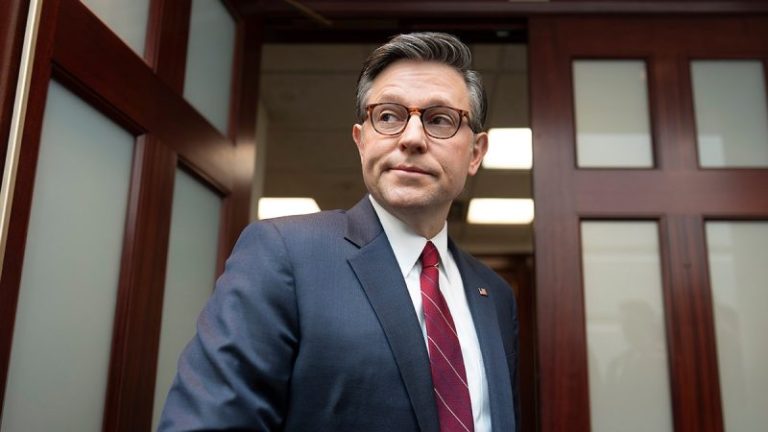
Speaking ahead of this week’s gold and silver price correction, Chris Vermeulen, chief market strategist at TheTechnicalTraders.com, said the metals were due for a ‘significant pullback.’

After that, they’ll be positioned for a new leg up.

‘There will be a time definitely to get back into metals, because I think metals will go dramatically higher from where they are right now,’ he explained. ‘But I do think that’s a year or two out.’

Securities Disclosure: I, Charlotte McLeod, hold no direct investment interest in any company mentioned in this article.

This post appeared first on investingnews.com

Matthew Piepenburg, partner at Von Greyerz, breaks down what’s really driving the gold price, going beyond headlines to the ongoing debasement of the US dollar.

He also discusses silver market dynamics.

Securities Disclosure: I, Charlotte McLeod, hold no direct investment interest in any company mentioned in this article.

This post appeared first on investingnews.com